BOMAN DESAI

WELCOME

and thanks for your interest. I have tried to say something about each of my novels as simply as possible. Please click on the novel of your choice in the right column to learn more about each book.

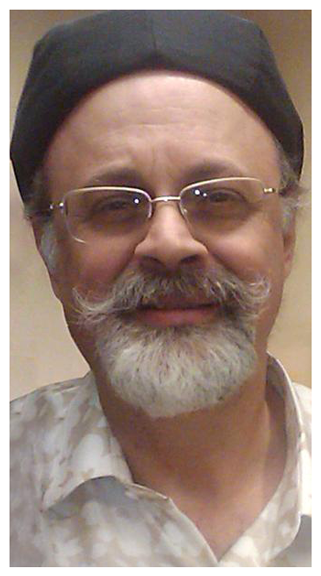
Photograph by Suzanne Meredith

1st of 3 Interviews


An Interview with Boman Desai by Indira Rodericks, AFTERNOON DESPATCH AND COURIER, Monday, March 15, 2004
“Because Love Has No Barriers!” Boman Desai’s new book is partly based on a relationship between a classmate and a teacher, over 30 years ago.

The book is called A WOMAN MADLY IN LOVE and its author Boman Desai candidly reveals that the essence of the story is based on a real-life incident. “The year was 1967 and I was a 17-year-old student. A classmate of mine dated one of our teachers. She is now dead and the classmate is a happily married lawyer in the city. Of course, it wouldn’t be fair to reveal the names,” he laughed and said.

“An image of the two of them walking together had stayed in my mind because I had been impressed with his confidence. Other classmates would have fidgeted or bounced on their feet or otherwise displayed their insecurity. At the time we envied him because she was an attractive woman, but years later my envy turned to curiosity. However fine he may have been, he was just seventeen, and I wondered what may have prompted her interest. The book is my answer to the question. I don’t know what actually happened and needed to imagine what may have happened. In the book, the character’s name is Farida Cooper, there is no connection to the real person. It’s just a name,” he continued.

The character born in Mumbai, travels to Chicago where she marries, but after a dispute with her husband returns home. Here she falls in love only to return to Chicago to live an independent life. “The book does not end on a tragic note nor on a happy note, but I would say the end is optimistic,” said Mr. Desai.

The book took three years to write and according to Mr. Desai if he wrote three pages a day, it was a good day. While he holds Indian authors such as Rohinton Mistry, Amitav Ghosh and Arundhati Roy (he finds Salman Rushdie too inconsistent) in high esteem, he admits that his reading preferences are old-fashioned. “For me a good novel shows you how to live well – or the consequences of living badly. In that sense, I suppose I am out of sync with the modern sensibility,” he said. “The WHAT of life is, to me, journalism. I don’t mean that as a pejorative, only a description. Journalists don’t have time to dig deep, but novelists are not unlike psychologists for their characters. Literature concerns itself as much with the WHY as the WHAT.”

The author with Stonecoast workshop, July 2009 Photograph by Linda Sienkiewicz

2nd of 3 Interviews


An Interview with Boman Desai by Anupreeta Das, THE INDIAN EXPRESS MAGAZINE, March 4, 2001
“I Belong Among Writers” Boman Desai discusses life at a remove from the bestseller lists with Anupreeta Das

Standing outside the door of Boman Desai’s hotel room, you wonder, for a split second, whether the author of ASYLUM, USA (HarperCollins India, Rs. 195) will be anything like Noshir, the effervescent but erratic protagonist. The door opens a crack, and a bespectacled Desai gently confirms your identity before parting with a jet-lagged “hi”. Except for the hair – salt and pepper now – held up by a ponytail, and the abstract-motif shirt, there’s no evidence of Noshir, experiencing angst in post-hippie America, or even Homi, the whiz-kid who invents a machine to scan his memory in THE MEMORY OF ELEPHANTS. Wafts of hippiedom do float up like forgotten memories, though – when Desai speaks of ‘people’ things like love, choice and rootlessness. And in the manner of people who straddle two cultures, Desai, a bit like his characters, crafts his Parsi and American identities into an elegant tapestry of experiences. Excerpts from an interview:

Q: You’ve been a bartender, dishwasher, farmhand, musician and teacher, among other things. How valuable are these experiences when you write.
A: Very much so, not only for writing but also for day-to-day existence. Growing up in Bombay, everything was done for me; in the States, I was taking up jobs that, in a sense, were servant jobs. I saw the other side of the picture. There is a line in ASYLUM, USA where I quote from Milton – Satan on how it’s better to reign in hell than serve in heaven. India is not hell, not by any stretch of the imagination, but the concept of reigning and serving help me get a sense of balance. I didn’t take as many things for granted.

Q: You’ve grown up in Bombay, lived in Chicago, and both cities feature in your books. Where does Boman Desai belong?
A: I am most comfortable writing about these two cities. I’ve actually written seven books, only two have been published so far [two more since the interview], and four have not even been read. The last book I wrote was based in Navsari (near Bombay), Bombay and London. Another book is set in an American circus during the Depression, while yet another is set in Germany in the 19th century [Trio]. Had I not written about Bombay and Chicago first, I wouldn’t have had the confidence to tackle other places. I know now that it’s just a question of bringing your emotion, your intelligence, and research to bear in a book. What makes characters alive is what we have in common with them, not what is different. The history and geography of the book’s location matter less than my understanding of the characters.

Q: Do you see yourself as part of the brigade of Indo-Anglian writers?
A: I do. If you want to get even narrower, I am a Parsi writer. But to me, the categories are incidental. I am a Parsi, therefore I write about Parsis, but I use my Parsi-ism, if you wish, as a springboard into other cultures.

Q: Have you followed Indo-Anglian writing?
A: I was most impressed with Amitav Ghosh; in SHADOW LINES, it was the technique, the way he brought so many disparate elements to bear upon a coherent and convincing story. Salman Rushdie, of course, though I find him more uneven than Ghosh. I like Rohinton Mistry’s work very much, and also Arundhati Roy’s novel. I have problems with every single one of them, but their virtues are so fine they transcend their flaws.

Q: Your next book?
A: It’s set in Bombay and the States, probably Chicago. It’s about a Parsi woman, 34 years, who has an affair with a 17-year-old student [the novel has since been published, A WOMAN MADLY IN LOVE]. The seed for this story was planted during my high school years. One of my classmates was dating one of the teachers, but the book has a lot more. She’s in America during the Women’s Movement, married to a man who uses literary theories like deconstruction to rationalise the fact that he’s cheating on her.

Q: THE MEMORY OF ELEPHANTS and ASYLUM, USA are more than 10 years apart, yet there are several similarities between the protagonists – both young Parsi men in the US in pursuit of higher education, both falling hopelessly in love with American women. How much of the autobiographical self has gone into the writing?
A: There is an autobiographical self, but I don’t like to differentiate it too much from the narrative self simply because then the focus changes. I want my readers to be interested in my characters, not in me. I use a lot of devices to distract readers, like the metaphor of the car in ASYLUM, USA, or the narrator-within-narrator. If I were to write a straight autobiography, it would become a self-indulgent exercise. I haven’t lived enough for that.

Q: Does being in Chicago help you write about India, and the immigrant experience?
A: The distance helps, but it’s not like I went away so I could write about what I left behind. Straddling two cultures gives you a dual perspective. Also, the kinds of jobs I took helped me learn independence and figure out what I wanted for myself.

Q: When you write, you run words into each other very often. Is that just a stylistic mannerism?
A: It was, for ASYLUM, USA, because I used an unskilled narrator, a rather bumptious kid initially, who thinks he’s quite wonderful for the things that have happened to him. It takes him a while to understand that we are wonderful only for the things we do, not for the things that happen to us.

3rd of 3 Interviews


An Interview with Boman Desai by Kushalrani Gulab, THE TIMES OF INDIA, February 20, 2001, “Many jobs, one Vocation"

He’s been a bartender, a farm hand, a shortorder cook, a telehone operator and an auditor. He can type 80 words a minute without a single typo. Right now, he works part time with a bank, calculating pensions. And he’s done all this to support himself as a writer.

Little did Mumbai boy Boman Desai know, when he left the country 31 years ago to study architecture, that he would spend so much time and energy just to do what he really wanted to do: write. But he’s more or less made it now: if not actually on any top 10 list of bestsellers, his books are fairly well known. And even though he’s written seven novels, but only published two, he’s far from being unhappy. In fact, he’s already working on another book.

“I just feel the work has been done,” says Desai simply. “It’s all there now.”

Maybe it’s just sheer stubbonrness, but Desai simply does not give up. He wanted to be a writer, and though he gave in to his father by studying architecture, he eventually wound up studying creative writing – and it took him 11 years to complete the Master’s degree in that subject.

“Whenever I started writing a book, I dropped out of school,” he explains. “When I finished the book I would drop in again, but every time I went back I was told that what I’d been studying was outdated, and I’d have to start all over again. They simply couldn’t appreciate the irony of my situation: that I dropped out of a creative writing program to write. Degrees are more important to academics than accomplishments.”

Selected Works

Fiction
Trio 2 picks up the story of Trio, bringing it to a close with the deaths of Clara Schumann and Johannes Brahms in 1896 and 1897, respectively – bringing to a close as well the largest work I have ever undertaken or will ever undertake. Germany grows in the hinterland from a conglomeration of 400+ principalities to one nation under Bismarck following the wars with Denmark, Austria, and France. The two books together have occupied me in one form or another from 1988 to 2006.
Sohrab Sanjana, the spoiled son of a wealthy Parsi family, marries Daisy Holiday because she is English. She marries him out of desperation, pregnant and stranded in Bombay, having arrived from London the day before World War II closes the seaways. Her deceit catches up with her in the shape of the Sanjana servant, Alphonse Gracias. Adding to the excitement is a tiger in the compound of the Sanjana bungalow and a family secret from the days of the Great War, perhaps more dangerous than the tiger.
A betrayed woman falls in love with a boy half her age only to find she has betrayed herself further. The novel probes the nature of love in its many forms, between husbands and wives, parents and children, friends and lovers, through the story of a woman who comes to terms with her strengths – and, more importantly, her weaknesses.
An epic portrayal of 19th Century Germany through the lives of its musicians, primarily the Schumanns and Brahms, but also Berlioz, Mendelssohn, Chopin, Liszt, and Wagner among others when their lives intersect those of the trio. A narrative of love, insanity, suicide, revolution, politics, war, and music. A great read for the beach, the summer, the winter, a holiday, a holiday in itself, a book in which one may live for a while.
Facing deportation, a naive Indian immigrant marries a lesbian and lives with her and her girlfriend and two dogs and four cats in a one-bedroom apartment. A romp and meditation with a rainbow of unusual characters (a witch, a stripper, a runaway, a conman, and a kleptomaniac among others) in the Chicago of the 70s.
A science nerd invents a machine capable of reactivating memory traces within his brain to relive the night he lost his virginity to an artist’s model (who subsequently dumped him) – only to have the machine malfunction. It leads him instead into the multi-generational saga of his own family, spanning three continents and a hundred years.

Quick Links

Find Authors